

Transforming your car’s interior into a celestial wonderland is no longer reserved for luxury supercars or custom builds. With the rise of affordable and high-quality starlight headliner kits, drivers everywhere are adding a touch of magic to their night drives. Whether you’re looking to enhance ambiance, impress passengers, or simply enjoy a more personalized driving experience, a starlight headliner kit can turn your vehicle’s roof into a twinkling night sky.
But with so many options flooding the market—ranging from DIY fiber optic kits to professionally installed LED systems—it’s easy to feel overwhelmed. That’s where this guide comes in. We’ve tested, researched, and compared dozens of starlight headliner kits to bring you the most comprehensive buying advice available. By the end of this article, you’ll know exactly what to look for, how much to spend, which features matter most, and how to avoid common pitfalls. Whether you’re a first-time buyer or upgrading from an older system, this guide will help you make a smart, informed decision.
The starlight headliner market has exploded in recent years, driven by advances in fiber optic technology, LED lighting, and consumer demand for customizable interiors. What was once a niche modification for Rolls-Royce or Bentley owners is now accessible to everyday drivers. From budget-friendly kits under $100 to premium installations costing over $1,000, there’s something for every taste and budget. But not all kits are created equal—some offer stunning visuals but poor durability, while others are easy to install but lack customization. Our goal is to cut through the noise and give you the tools to choose the right kit for your needs, vehicle, and lifestyle.

What to Look for When Buying a Starlight Headliner Kit
1. Budget & Price Range
Your budget is the first and most important factor when shopping for a starlight headliner kit. Prices can range from as little as $50 for basic DIY kits to over $2,000 for professional-grade installations with thousands of fibers and advanced lighting controls. Before you start browsing, determine how much you’re willing to spend—not just on the kit itself, but also on installation tools, adhesives, and potential professional labor.
Keep in mind that cheaper kits often use lower-quality LEDs or fewer fiber optic strands, which can result in a less realistic star effect. Mid-range kits ($200–$600) typically offer the best balance of performance and affordability, while premium options deliver cinematic-quality lighting with app control, color changing, and even music synchronization.
2. Performance Specifications
Performance specs go beyond just brightness—they determine how realistic and immersive your starry sky will feel. Key specs to check include:
- Number of fiber optic strands: More fibers mean more stars. Entry-level kits may have 100–200 fibers, while high-end systems can include 1,000 or more.
- LED brightness and color temperature: Look for LEDs rated between 6,000K and 6,500K for a natural white starlight effect. Some kits offer RGB color-changing LEDs for added flair.
- Light diffusion quality: High-quality fibers and diffusers prevent hotspots and ensure even, soft lighting that mimics real stars.
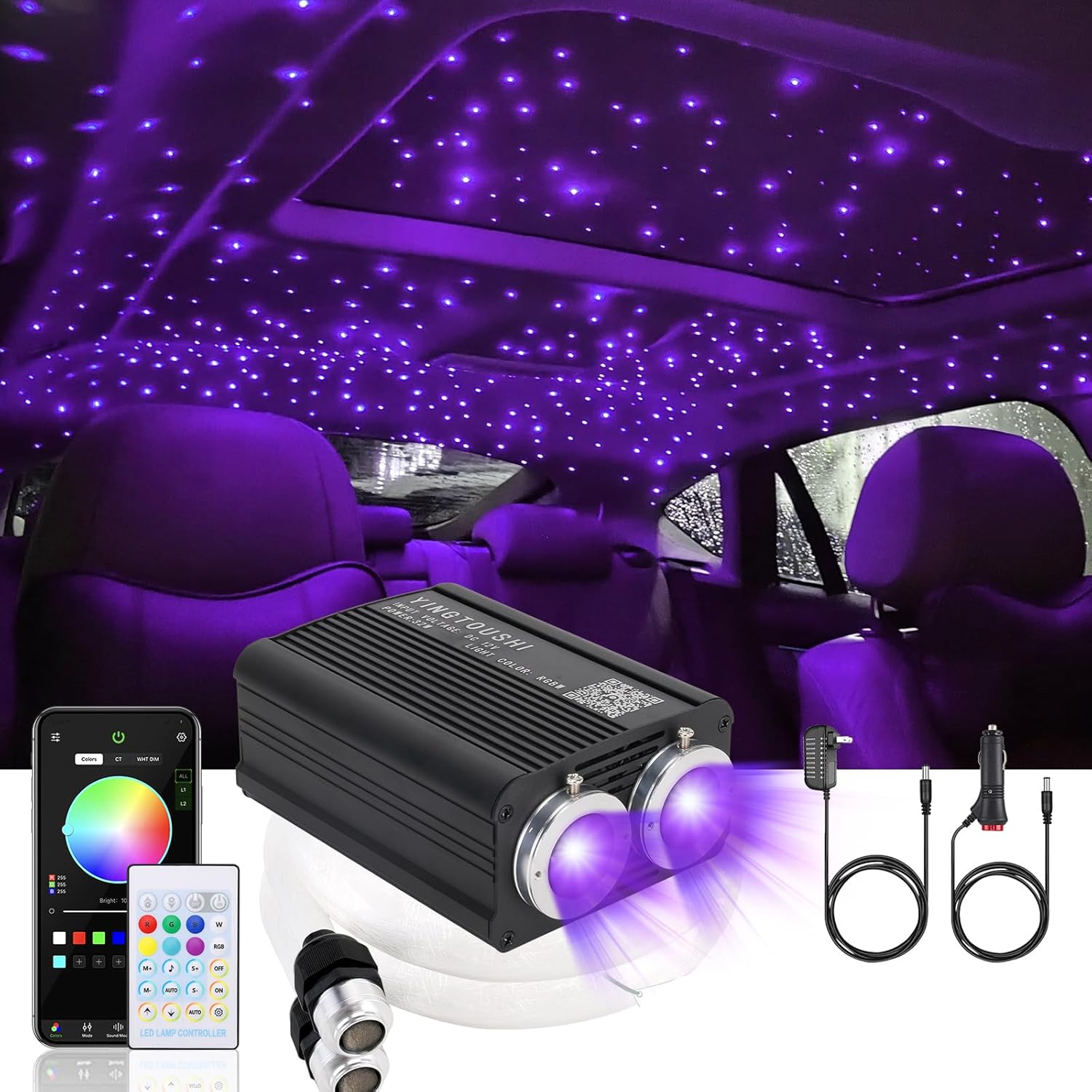
- Control options: Basic kits use simple on/off switches, while advanced models offer Bluetooth, smartphone apps, or even voice control via Alexa or Google Assistant.
A kit with poor diffusion or uneven lighting can look artificial and distracting, especially at night. Always check product images and videos to see how the light actually appears in real-world conditions.
3. Build Quality & Durability
Since the headliner is a permanent interior component, durability is critical. Cheap kits often use brittle fibers that break during installation or over time, or low-grade adhesives that fail in extreme temperatures. Look for kits that use PMMA (acrylic) fiber optics, which are flexible, heat-resistant, and long-lasting.
Also consider the housing and LED module. Metal or reinforced plastic housings are more durable than flimsy plastic enclosures. Check customer reviews for reports of fiber breakage, LED burnout, or adhesive failure—especially in hot climates where interior temperatures can exceed 140°F.
Additionally, some kits come with protective sleeves or pre-terminated fiber bundles, which reduce the risk of damage during installation. These small details can make a big difference in long-term reliability.
4. Features & Functionality
Modern starlight headliner kits offer a surprising range of features beyond basic lighting. Consider what level of customization matters to you:
- Color options: White-only kits are classic, but RGB or RGBW models let you shift colors for different moods or occasions.
- Dimming and brightness control: Essential for avoiding glare while driving at night.
- Music sync: Some kits pulse or twinkle in time with your music—great for parties or road trips.
- Preset patterns: Star constellations, meteor showers, or slow twinkling effects add realism and visual interest.
- Remote or app control: Convenient for adjusting settings without reaching behind the headliner.
If you’re installing the kit yourself, also consider ease of use. Kits with pre-drilled templates, adhesive backing, or plug-and-play wiring save significant time and frustration.
5. Brand Reputation
With so many generic brands on Amazon and eBay, it’s tempting to go with the cheapest option. But brand reputation matters—especially when it comes to technical products like fiber optics. Established brands such as Starlight Systems, Fiber Optic FX, and LumiSheet have years of experience and positive user feedback.
Look for brands that provide detailed installation guides, responsive customer support, and clear product documentation. Avoid sellers with no contact information, vague descriptions, or only stock photos. A reputable brand will stand behind its product and offer troubleshooting help if something goes wrong.
Also check if the brand offers compatibility guides for specific vehicle makes and models. Some kits are designed for sedans, while others work better in SUVs or convertibles with larger headliner areas.
6. Warranty & Support
A solid warranty is a sign of confidence in product quality. Most reputable kits come with at least a 1-year warranty, covering defects in materials and workmanship. Premium brands may offer 2–3 years or even lifetime warranties on certain components.
Support is just as important. Can you reach someone by phone or email if you have questions? Do they offer video tutorials or live chat? Some companies even provide remote installation assistance via Zoom or WhatsApp—especially helpful for first-time installers.
Before buying, read the fine print. Some warranties are voided if the kit is installed by a non-certified technician or if modifications are made. Make sure you understand the terms to avoid surprises later.
7. Installation Complexity
Installation difficulty varies widely. Basic kits require you to drill holes in the headliner, thread fibers, and secure the LED module—all tasks that demand patience and precision. More advanced kits may include templates, adhesive strips, or magnetic mounts to simplify the process.
If you’re not comfortable with interior trim removal or drilling into your car’s roof, consider hiring a professional. Many audio shops and custom car studios offer installation services for $200–$500, depending on complexity. Some brands even partner with certified installers nationwide.
DIY kits typically take 4–8 hours for a first-timer, while experienced users can finish in under 3 hours. Always test the system before final reassembly to avoid having to disassemble everything again.
8. Vehicle Compatibility
Not all kits fit all vehicles. The size and shape of your headliner, sunroof placement, and interior trim design all affect compatibility. Measure your headliner area before buying—most kits cover 2–4 square feet, but larger vehicles may need multiple modules.
Some kits are designed specifically for popular models like the Honda Accord, Toyota Camry, or Ford F-150. Others are universal but may require trimming or custom routing. Check the product description for vehicle fitment notes or contact the seller with your make, model, and year.
If your car has a panoramic sunroof, ensure the kit doesn’t interfere with its operation. Some fiber bundles are flexible enough to route around sunroof frames, while others require careful planning.
Different Types of Starlight Headliner Kits

Common Buying Mistakes to Avoid

❌ Mistake: Choosing Based on Price Alone
Why it’s bad: The cheapest kit may save you money upfront but cost more in frustration, replacements, or professional fixes. Low-quality fibers break easily, and dim LEDs ruin the illusion.
What to do instead: Set a realistic budget and prioritize value over price. A $300 kit with 500 fibers and good reviews is often better than a $100 kit with 200 brittle strands.
❌ Mistake: Ignoring Installation Requirements
Why it’s bad: Assuming you can install it in an hour without tools or experience leads to damaged trim, misaligned fibers, or electrical issues.
What to do instead: Watch installation videos, read manuals, and assess your skill level. If unsure, hire a pro or choose a no-drill panel kit.
❌ Mistake: Overlooking Vehicle Fitment
Why it’s bad: A kit designed for a compact car won’t cover a large SUV headliner, leaving dark patches or requiring multiple units.
What to do instead: Measure your headliner and check compatibility charts. Contact the seller if unsure.
❌ Mistake: Skipping the Warranty Check
Why it’s bad: Without a warranty, a defective LED or broken fiber bundle means buying a whole new kit.
What to do instead: Only buy from brands offering at least a 1-year warranty and clear return policy.
❌ Mistake: Expecting Movie-Theater Quality from Budget Kits
Why it’s bad: Disappointment sets in when 100 fibers look sparse and artificial compared to luxury car displays.
What to do instead: Manage expectations. Budget kits are great for ambiance, not realism. Upgrade to 500+ fibers for a fuller effect.
❌ Mistake: Not Testing Before Final Assembly
Why it’s bad: Reassembling your entire interior only to find a faulty connection wastes hours of work.
What to do instead: Power up the system and test all functions before securing fibers or reinstalling trim.
Budget Guidelines: How Much Should You Spend?
- Entry-Level ($50–$150): Ideal for first-timers or those on a tight budget. Expect 100–300 fibers, basic white LEDs, and simple on/off control. Great for adding subtle ambiance but may lack realism.
- Mid-Range ($200–$600): The sweet spot for most buyers. These kits offer 400–800 fibers, better diffusion, dimming, and sometimes app control. Excellent balance of quality and affordability.
- Premium ($600–$1,200): For enthusiasts who want cinematic results. Includes 1,000+ fibers, RGB lighting, music sync, and smartphone integration. Often sold as complete systems with templates and support.
- Luxury ($1,200+): Reserved for luxury vehicles or professional installations. Features hand-placed fibers, custom constellations, and seamless integration with interior lighting. Best handled by certified installers.

Expert Tips for Getting the Best Deal
- Buy during holiday sales: Black Friday, Cyber Monday, and end-of-year clearances often bring 20–30% off premium kits.
- Check manufacturer websites: Brands like Starlight Systems often offer exclusive bundles or free shipping not available on Amazon.
- Look for refurbished or open-box deals: These can save 30–50% and often come with the same warranty as new units.
- Bundle with installation: Some shops offer discounted labor when you buy the kit through them.
- Read return policies carefully: Ensure you can return the kit if it doesn’t fit or perform as expected.
- Ask for samples: Reputable sellers may send fiber samples so you can test light quality before buying.
- Join car forums: Enthusiast communities like Reddit’s r/cars or specialized Facebook groups often share discount codes and honest reviews.
Frequently Asked Questions
Q: Can I install a starlight headliner kit myself?
A: Yes, many kits are designed for DIY installation. However, it requires patience, basic tools, and comfort with interior trim removal. If you’re not confident, hire a professional.
Q: Will the kit damage my car’s headliner?
A: If installed correctly, no. Use gentle adhesives and avoid excessive drilling. Pre-assembled panels eliminate the need for holes altogether.
Q: How many fibers do I need?
A: For a realistic effect, aim for at least 500 fibers. Small cars may get by with 300, while larger vehicles benefit from 800–1,000+.
Q: Can I change the color of the stars?
A: Only if you buy an RGB or RGBW kit. White-only kits cannot change color.
Q: Will the lights distract me while driving?
A: Not if properly dimmed. Most kits include dimming controls to reduce brightness at night.
Q: Are starlight kits legal?
A: In most regions, yes—as long as the lights don’t flash, strobe, or interfere with driver visibility. Check local laws to be safe.
Q: How long do the LEDs last?
A: Quality LEDs last 30,000–50,000 hours—enough for decades of nightly use.
Q: Can I add more fibers later?
A: Some kits allow expansion, but it’s easier to buy the right size upfront. Mixing brands can cause compatibility issues.
Q: Do I need a sunroof to install one?
A: No. Kits work in any vehicle, with or without a sunroof. Just route fibers carefully around existing features.
Q: What’s the difference between fiber optic and LED panel kits?
A: Fiber optic kits use thin strands to create individual star points, offering a more realistic effect. LED panels emit light across a surface, which can look less natural but are easier to install.
Our Final Recommendations
- Best for Budget-Conscious Buyers: Starlight FX 300-Fiber DIY Kit – Affordable, easy to install, and delivers a charming starfield effect for under $100.
- Best Overall Value: Fiber Optic FX 600-Strand Smart Kit – 600 high-quality fibers, app control, dimming, and music sync for under $400. Perfect balance of performance and price.
- Best Premium Option: Starlight Systems Pro Series 1200 – 1,200 hand-placed fibers, RGBW lighting, and professional-grade materials. Ideal for luxury vehicles.
- Best for Beginners: LumiSheet No-Drill Panel Kit – Magnetic mounting, pre-configured star pattern, and plug-and-play wiring. No drilling required.
- Best for Advanced Users: Custom Fiber Optic Constellation Kit by LightMyRide – Fully customizable star maps, Bluetooth control, and support for multiple zones. For true enthusiasts.
Conclusion: Making the Right Choice
Choosing the right starlight headliner kit isn’t just about picking the shiniest stars—it’s about finding a system that matches your vehicle, budget, skill level, and desired experience. From simple DIY setups to cinematic installations, the options are vast, but the right one is out there.
Remember to prioritize build quality, fiber count, and ease of installation. Don’t let flashy marketing distract you from core performance specs. And always consider long-term value over short-term savings. A well-chosen kit will enhance your drives for years, turning every nighttime journey into a private light show.
Take your time, do your research, and don’t hesitate to reach out to manufacturers or installers with questions. Whether you’re upgrading your daily driver or customizing a show car, a starlight headliner is more than a mod—it’s an experience. So go ahead, reach for the stars. Your car—and your passengers—will thank you.